Guide · Interior finishes
Wall molding, trim and accent walls: planning interior finish upgrades in South Florida
Wall molding, trim and a well-chosen accent wall can change how a room feels without moving a single wall. They’re also some of the most visible details in a home, so small planning mistakes show. This guide walks through the choices South Florida homeowners usually face: which style fits the room, which materials hold up in our humidity, and how finish work fits into a bigger renovation.
Start with what the room needs
Before picking a profile from a catalog, decide what job the trim is doing. In most homes it’s one of three things:
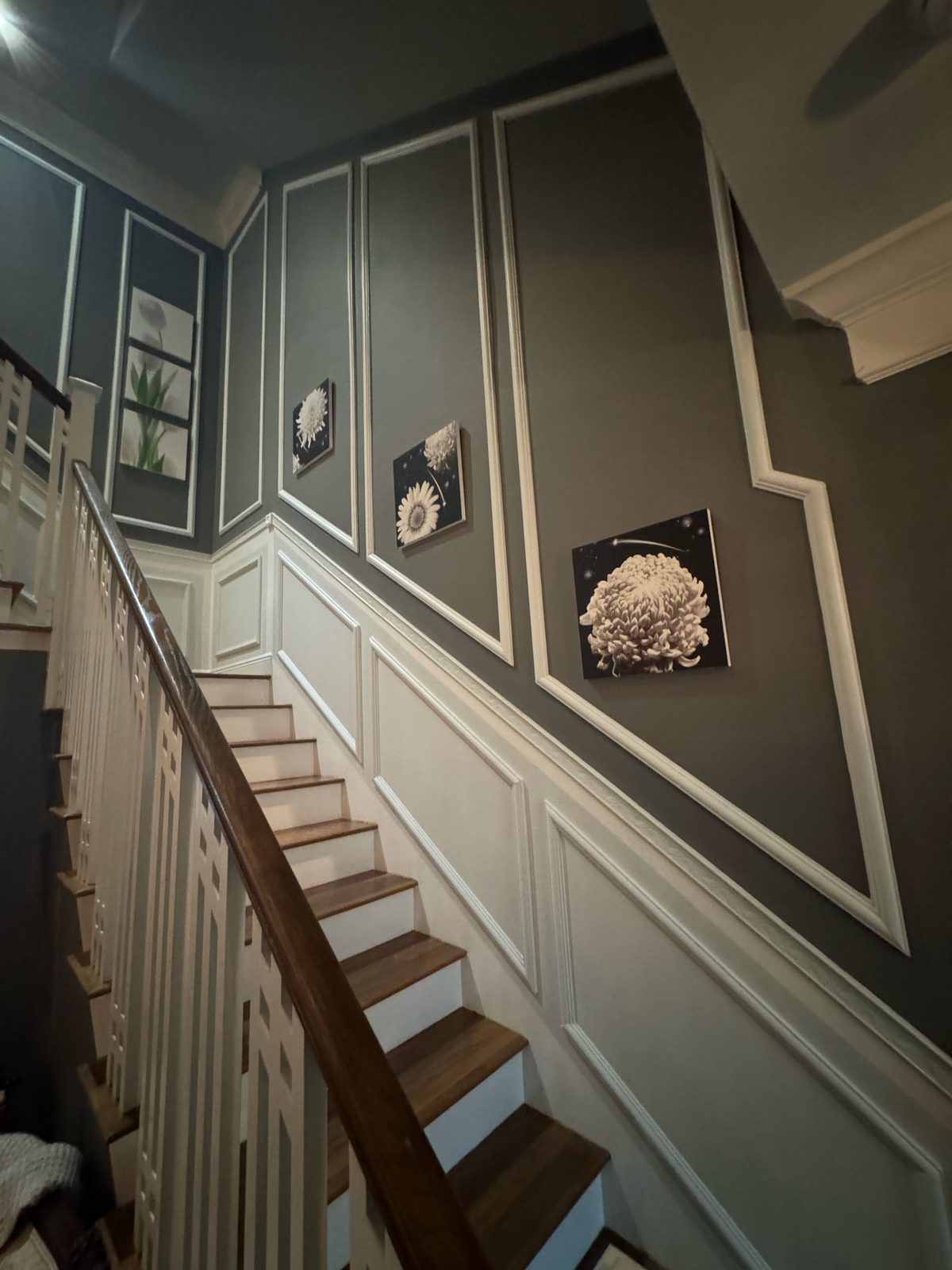
- Adding character to plain walls. Many South Florida condos and newer houses have flat drywall from floor to ceiling. Picture-frame molding, wainscoting or a simple chair rail gives those walls structure and shadow lines.
- Finishing transitions. Baseboards, door casings and crown molding cover the joints between floors, walls and ceilings. When you replace flooring or doors, old trim often looks tired or no longer fits.
- Creating a focal point. An accent wall behind a sofa, bed or dining table draws the eye and gives art or lighting a backdrop.
Knowing the goal keeps the design focused. A staircase wall that guests see every day can carry a bold paneled pattern; a small hallway usually needs only clean baseboards and casings.
Common styles and where they work
- Picture-frame (box) molding: thin rectangles applied to the wall and painted. It works well on staircases, entries and dining rooms, and it can follow the angle of a stair, as in the project above.
- Wainscoting and board-and-batten: paneling on the lower part of the wall, often topped with a chair rail. It suits dining rooms, hallways and mudroom-style entries, and protects walls from chairs and bags.
- Crown molding: trim where the wall meets the ceiling. It can make a room look finished, but in rooms with low ceilings a slimmer profile is usually the better choice.
- Taller baseboards and wider casings: an easy upgrade that makes doors and floors look more substantial, especially after a flooring project.
- Accent walls: a single wall in a deeper or contrasting color, sometimes combined with paneling, slats or wallpaper.
Materials and South Florida humidity
Our climate is hard on wood products. High humidity, long periods with the air conditioning running, and the occasional power outage mean trim expands and contracts more than it would in a drier place. A few practical points:
- MDF is smooth, stable on dry walls and paints beautifully, which is why it’s common for picture-frame molding and paneling indoors. It does not like water, so it’s usually a poor choice near showers, tubs, exterior doors or anywhere that may get wet.
- Solid wood takes stain and can be repaired, but it moves with humidity. Letting it acclimate inside the air-conditioned home before installation helps reduce gaps later.
- PVC or other synthetic trim resists moisture and is often used in bathrooms, laundry rooms and areas near the outdoors. It needs the right adhesive and fasteners and can look slightly different once painted, so ask to see a sample.
Whatever the material, good results come from preparation: flat, sound walls, tight joints, caulked seams and a durable paint finish. Semi-gloss or satin finishes are popular on trim because they wipe clean, while walls are often a flatter sheen so the molding stands out.
Choosing colors for an accent wall
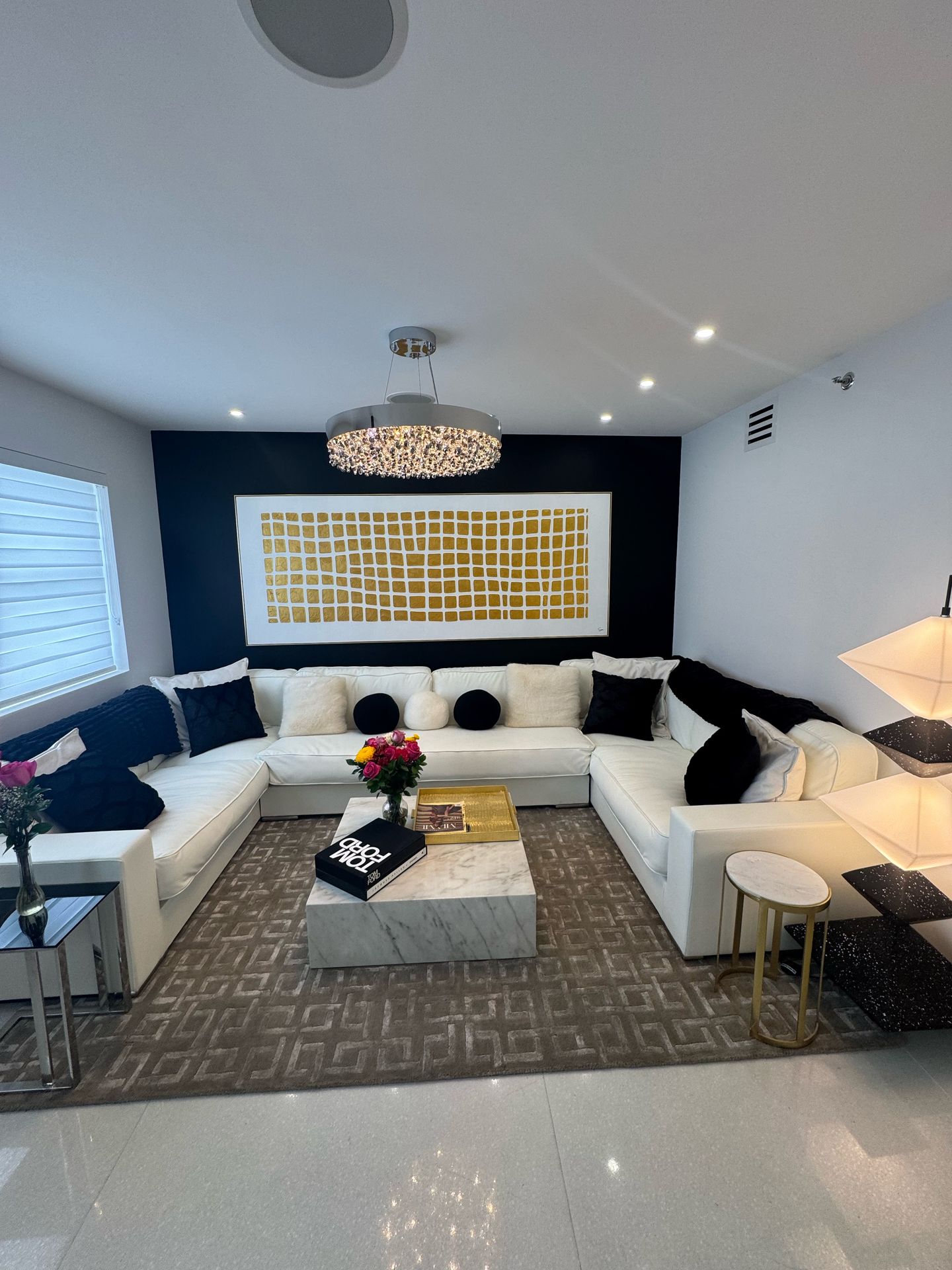
Deep colors such as navy, charcoal or forest green can look rich in South Florida light, but they behave differently at different times of day. Paint a large sample on the actual wall and look at it in the morning, afternoon and at night with your lights on before you commit.
A few habits help an accent wall look intentional:
- Pick the wall the eye already goes to: behind the sofa, the headboard wall or the end of a hallway.
- Coordinate it with something else in the room, such as the art, cabinets or upholstery.
- Think about lighting. A chandelier, sconces or picture lights can make a dark wall glow; if new fixtures need wiring, plan that before painting.
- Remember that very dark colors may need extra coats and careful touch-ups.
How finish work fits into a bigger renovation
Trim and paint are usually among the last steps of a remodel, after drywall, flooring and cabinets are in. If you’re planning a home renovation or new flooring, it’s often worth deciding on baseboards and casings at the same time so they’re ordered and installed in the right sequence.
A few planning questions to settle early:
- Which rooms are included? Matching trim from room to room keeps the home consistent.
- Are you keeping existing doors and floors? New flooring can change baseboard height, and new doors usually come with new casings.
- Is there any electrical work? Moving outlets or adding sconces is a separate trade from trim and paint. Ask your contractor how it will be handled and whether it needs a permit where you live.
- Do you live in a condo? Many associations set work hours and ask for contractor paperwork before work begins. Check your building’s rules, and see our condo renovation guide for how approvals usually fit together.
Questions to ask before you hire
- What material will be used in each room, and why?
- How will the walls be prepared, and who handles patching and caulking?
- Are painting and trim installation included in the same scope?
- How will furniture and floors be protected while work is going on?
- Can I see photos of similar work you’ve completed?
A clear written scope that lists rooms, materials, profiles and paint finishes is the best way to compare estimates fairly. For more on what moves a project’s price, read what affects remodeling cost in South Florida.
Next steps
If you’re thinking about molding, trim or an accent wall anywhere in Miami-Dade or Broward, start with a free estimate. Tell us which rooms you have in mind and share a few photos, and we’ll put together a clear written scope. You can also browse our painting services and more of our work in the project gallery.
Ready to start your project?
Tell us about your project and get a clear written scope and estimate.